an e-commerce business built overnight
The business had outgrown the website that helped save it.
Fish-Field's first online store had been built and maintained internally by the owner and general manager, neither of whom had a background in web design or development. The priority had been getting the business online quickly, and as the product catalog grew, the limitations of that early website became increasingly apparent—particularly in navigation, product discovery, and the overall shopping experience.
Despite those limitations, Fish-Field had its most profitable year to date. The challenge was no longer proving that e-commerce could work; it was building an experience capable of supporting where the business was headed next.
That meant looking beyond a visual redesign. The website's information architecture needed to be reconsidered, the growing product catalog needed to be easier to navigate, and Fish-Field needed a more consistent approach to how it presented and marketed itself across digital channels.
I knew design. I didn't know fishing.
Working inside the retail store gave me direct access to that world. I spent my first few weeks talking with customers, asking questions, and learning from coworkers who understood the industry far better than I did. I combined those conversations with customer surveys, Google Analytics, and Lucky Orange session data to identify recurring behaviors and points of friction within the existing store.
I joined Fish-Field with a background in design and e-commerce, but zero knowledge of fishing. Before I could improve the experience, I needed to understand the products, the people buying them, and how anglers actually shopped.
Customer profiles
What I learned revealed several distinct types of customers, with considerable differences in fishing experience, familiarity with technology, product knowledge, and shopping priorities. Understanding those differences helped me identify where the website needed to support different levels of experience without making product discovery more complicated.
Those insights revealed that Fish-Field wasn't serving just a single type of customer.
Mobile first
This made mobile usability a priority throughout the redesign. Navigation, product discovery, and purchasing all needed to work effectively on smaller screens—not simply adapt to them after the desktop experience had been designed.
63% of sessions came from mobile.
Mobile
63%
Desktop
33.6%
Tablet
3.4%
The first redesign wasn’t about starting over.
Fish-Field's existing Shopify store was already generating meaningful sales, so my first priority wasn't to replace it—it was to improve the experience customers were already using.
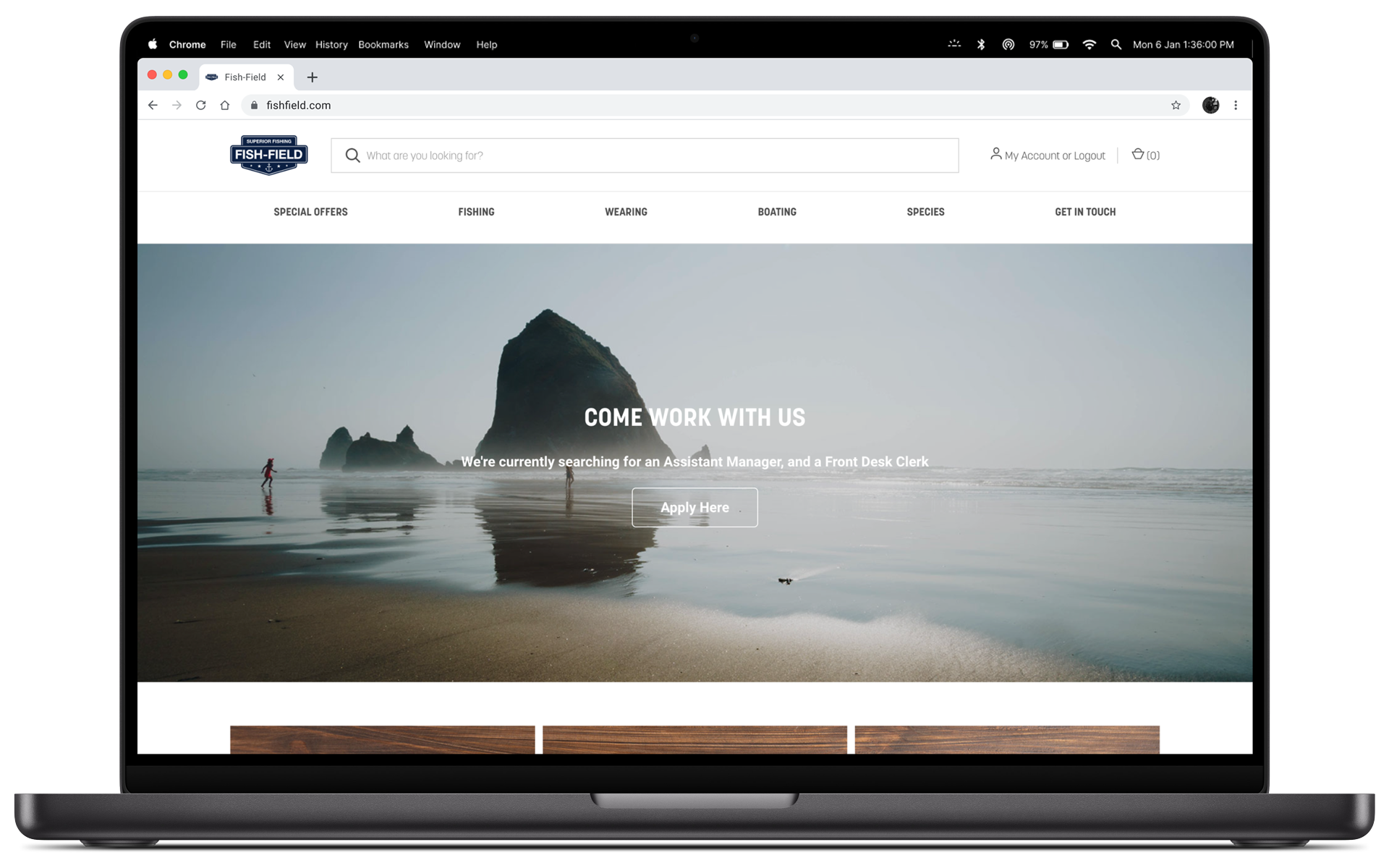
Working with the general manager, I reorganized the site's information architecture around how customers searched for products and refined the interface to follow more familiar e-commerce conventions. The redesign focused on making navigation clearer, improving product discovery, and creating a more consistent experience across the storefront, particularly on mobile.
The redesign worked. The underlying system didn't.
The Shopify redesign improved the customer experience, but it couldn't solve the larger structural problems behind the site. Fish-Field's catalog had grown to more than 20,000 products, with years of inconsistent product information, imagery, categorization, and inventory management underneath it.
Rather than carrying those problems into another redesign, we decided to rebuild the e-commerce experience from the ground up.
Information architecture
I audited how competing fishing retailers organized similarly complex catalogs and compared those patterns against what I'd learned from Fish-Field's customers. I worked through different ways of grouping products by type, fishing style, and customer terminology, gradually refining the structure into a navigation system that could accommodate the existing catalog while remaining flexible enough for new products.
20,000+ products needed a structure that customers could actually navigate.

20,000+ products. A chance to start over.
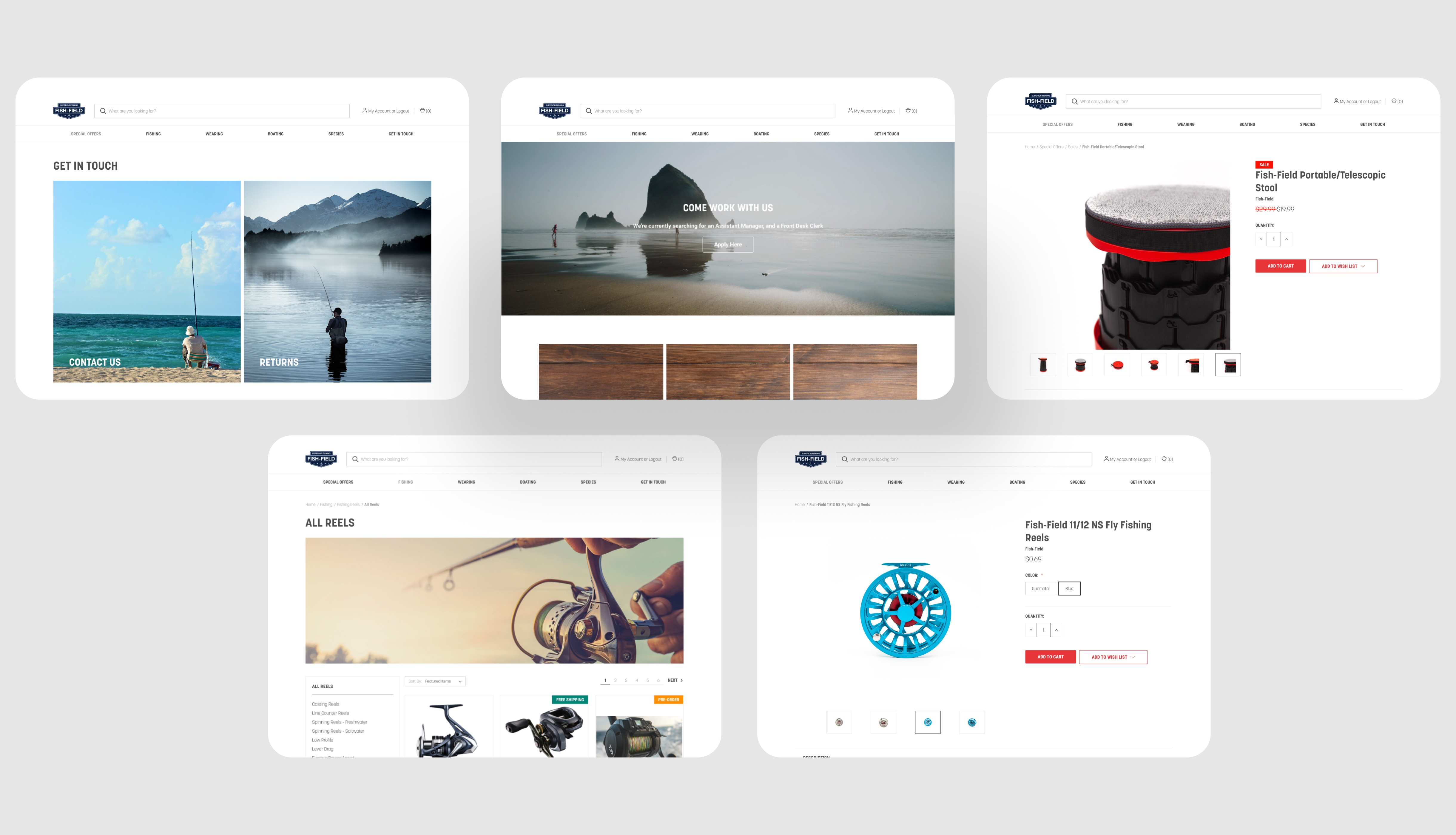
Moving to BigCommerce gave us the opportunity to rebuild Fish-Field’s e-commerce experience from the ground up. Rather than carrying years of inconsistent product data and structural problems into another redesign, we could rethink how the store was organized, how products were presented, and how the experience worked as a whole.
I was responsible for both designing and developing the new storefront. Working across both disciplines meant designing within the realities of my implementation abilities, pushing me to work iteratively as the system took shape.
The catalog
Rebuilding the storefront was only part of the job. I reviewed every product in Fish-Field’s catalog to improve image quality, descriptions, specifications, and product information. When existing manufacturer imagery wasn't good enough, I photographed products myself to maintain a more consistent standard across the store.
Working at that scale changed the way I approached the design. Product pages couldn't rely on one-off solutions—they needed a system flexible enough to accommodate thousands of products across very different categories while remaining consistent and easy to maintain.
20,000+ products meant 20,000+ details to get right.
My role didn't stop at the website.
As Fish-Field’s only in-house designer, my role often extended beyond traditional design responsibilities. I worked across the business wherever the digital and physical customer experience intersected—from branding, photography, and marketing to the systems and operations supporting the e-commerce store.
Hands on
Building the business, literally.
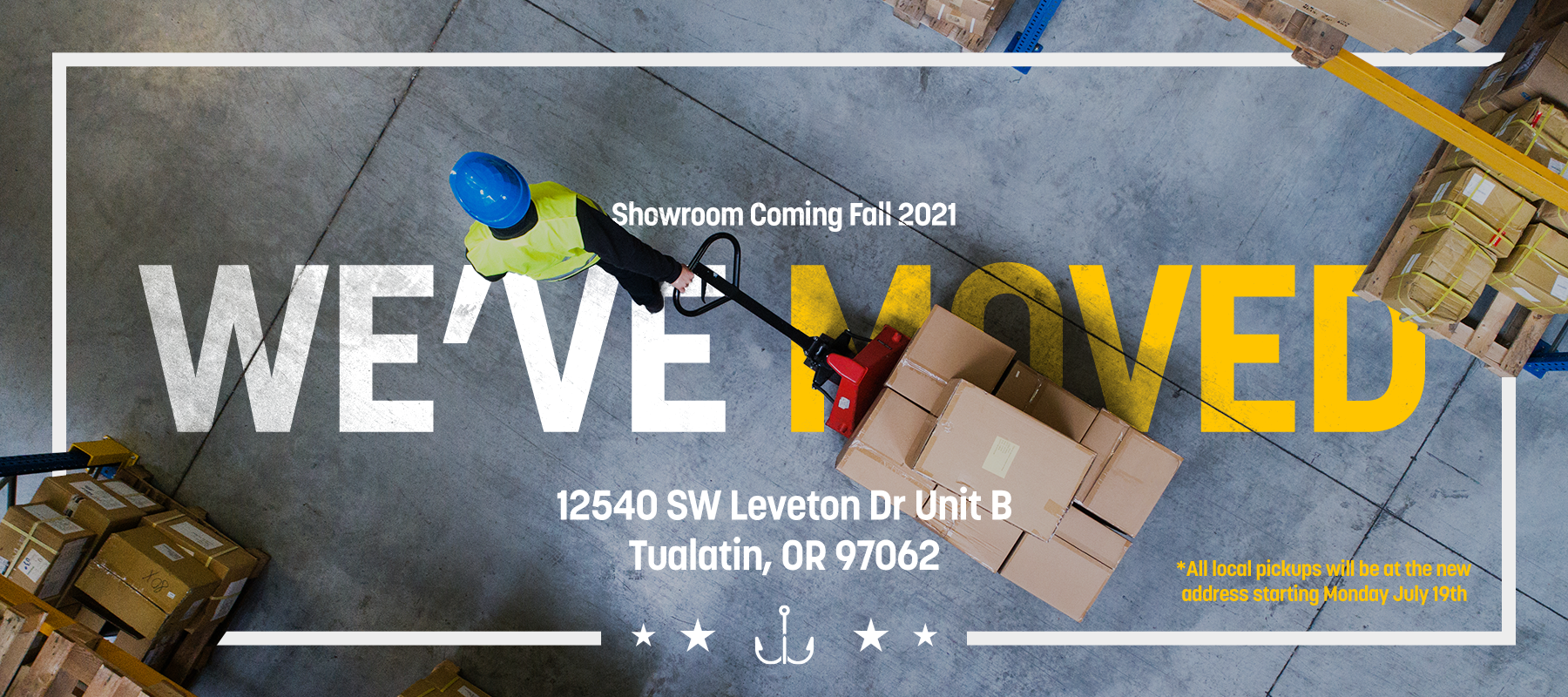
When Fish-Field moved into a larger location, I played a hands-on role in making the transition happen. Alongside inventorying and reorganizing more than 20,000 products, I helped implement SkuVault and establish locations for inventory throughout the new warehouse. I also worked on the physical buildout itself—assembling steel shelving, operating forklifts, and doing whatever else was needed to get the new location operational.
Brand identity
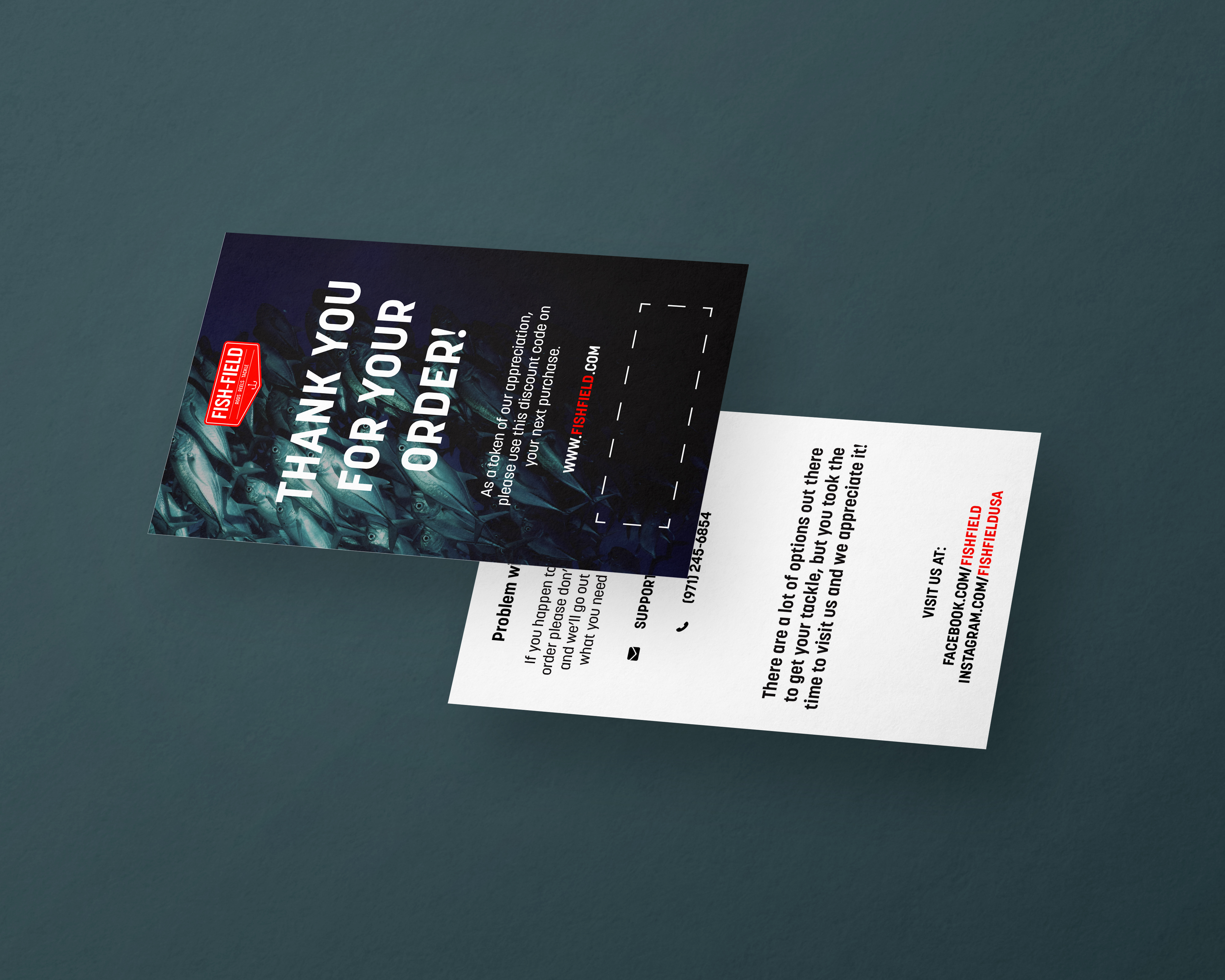
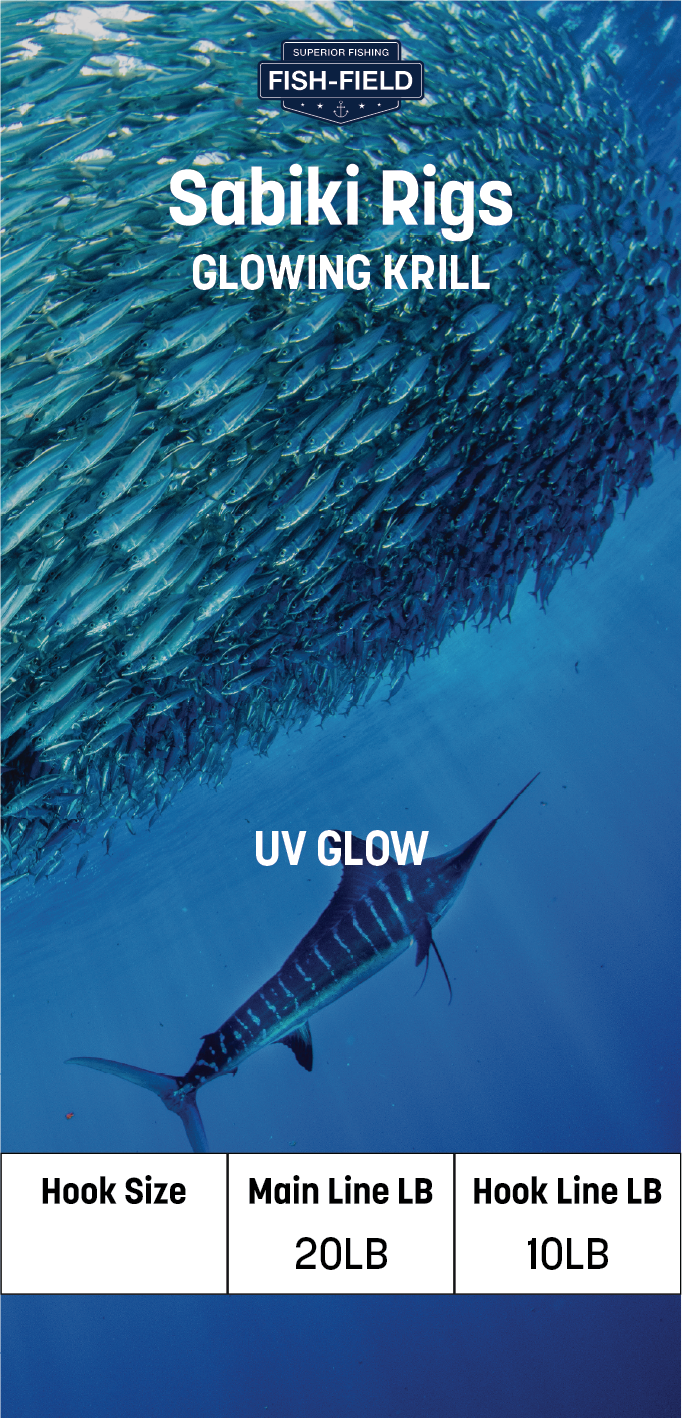
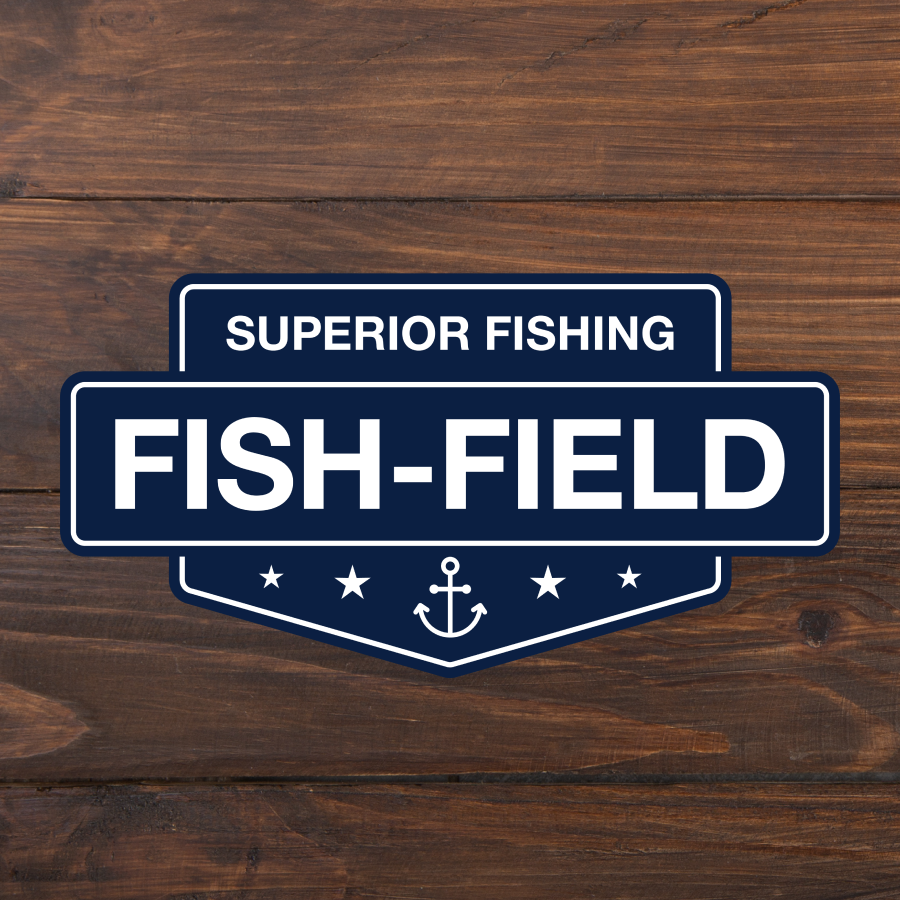
Midway through the BigCommerce rebuild, I was asked to refresh Fish-Field’s visual identity. I developed a new logo and supporting visual system that could extend across the website, product packaging, marketing, and physical customer touchpoints.
Social media & marketing
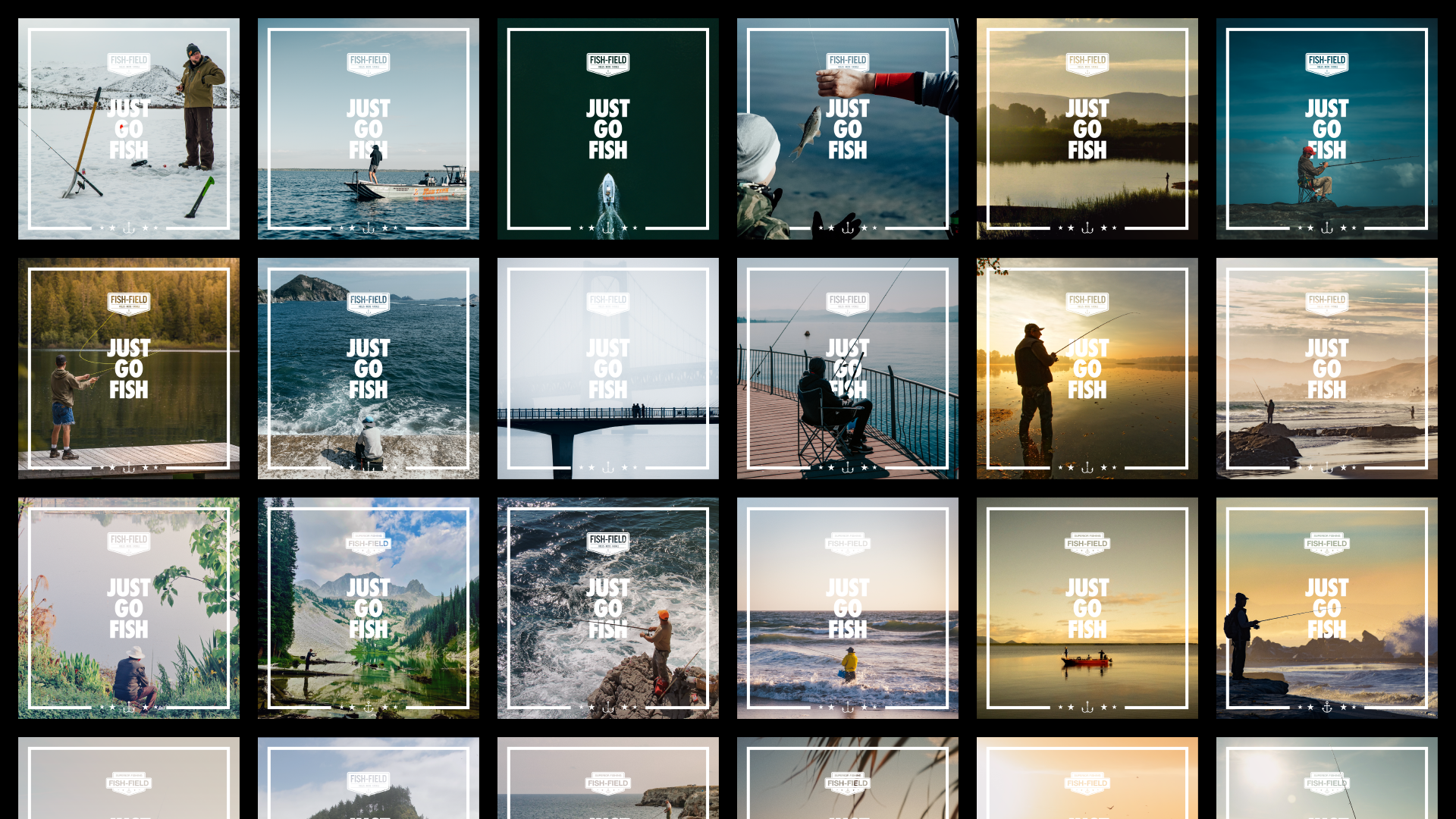
Alongside my work on the e-commerce experience, I was responsible for much of Fish-Field’s day-to-day visual marketing. Over two years, I created more than 300 social media posts promoting new products, sales, events, and the broader Fish-Field brand—maintaining a consistent visual presence across an ongoing stream of content.
Working that closely with the business changed the way I approach design. It taught me to look beyond the interface, understand the systems and people behind it, and focus on solutions that work not only for customers, but for the people responsible for running the business every day.
Fish-Field taught me how deeply design is connected to the business around it. Over two years, my role grew from improving an existing e-commerce experience to working across nearly every part of the company—from customer research and information architecture to development, branding, marketing, inventory systems, and physical operations.
Good design requires understanding more than the interface.